
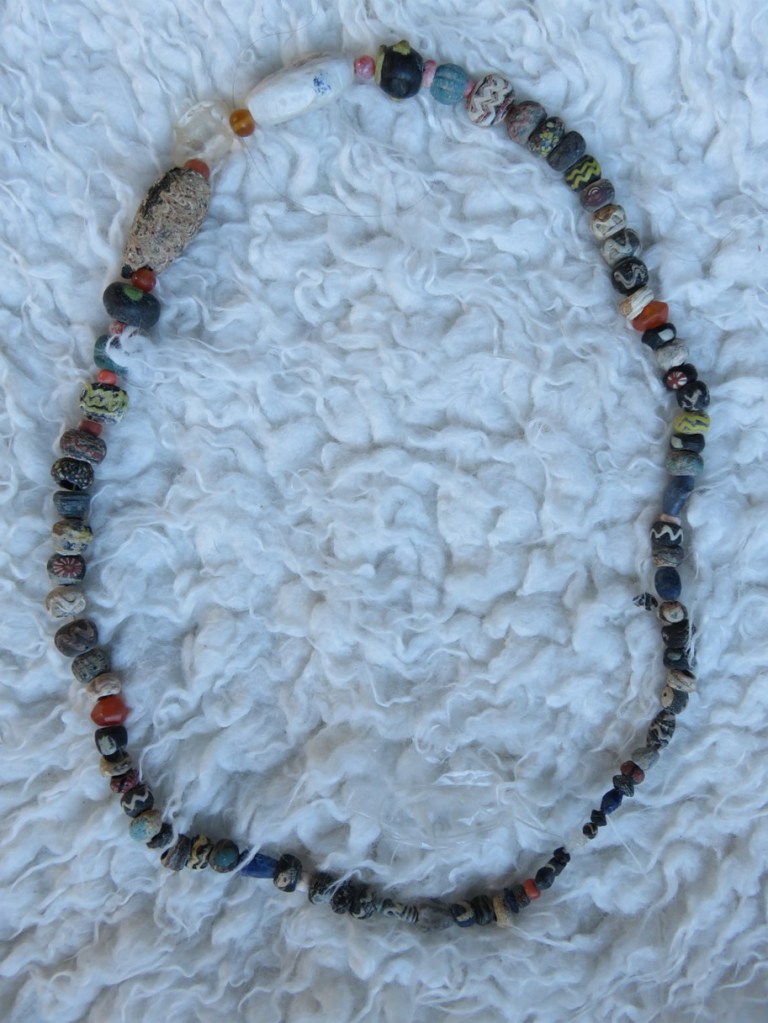
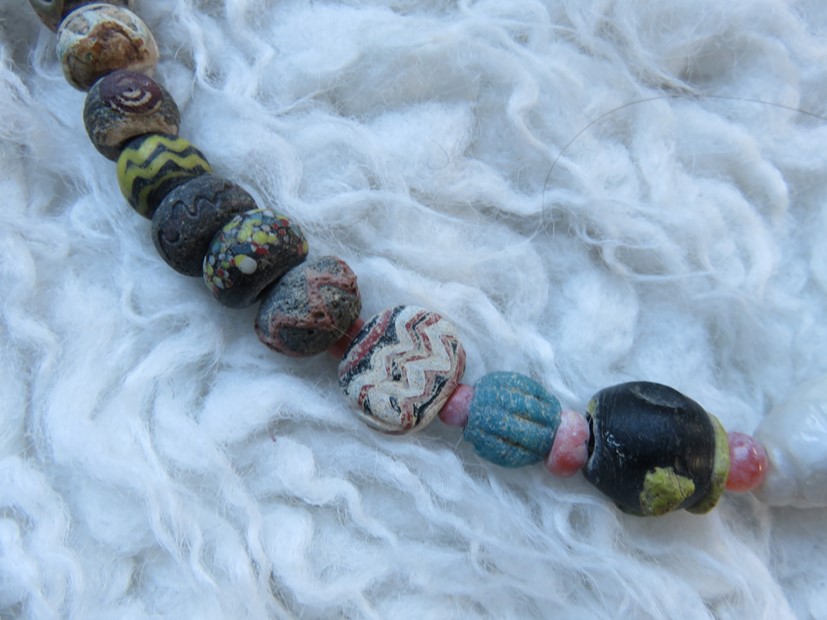


This Baltic / Rus-Viking necklace shows a group of beads (symphatically joined together) from the area around Lake Ladoga in present North Western Russia.
Beads found in a context from the Viking period have travelled in many ways. Not only in distance, but also in time. It is not unusual to find beads made in Roman times among the early medieval beads. Beads lasted a very long time and travelled..
In today’s consumer market it is difficult to appreciate the value that beads had in historical periods. Every bead, regardless of method of manufacture was the result of great labour, whether polished from a pebble of carnelian, wound from glass produced from sand and colored with minerals extracted from the earth or made from glass hard natural mollusks.
For stone beads, drilling the stringing hole alone was a labor of many hours per bead !
Accordingly, when made, ancient beads were extremely valuable. None valued them more than Vikings. In The Vikings, Time Life Series, Wernick, p.94 states that ” Vikings would go to any length to get ahold of coloured beads”. Viking raids often resulted in demands for tribute and beads were above gold. As a result, Vikings owned and cherished beads, produced from Africa to Eastern Europe and England, in addition to those domestically produced.
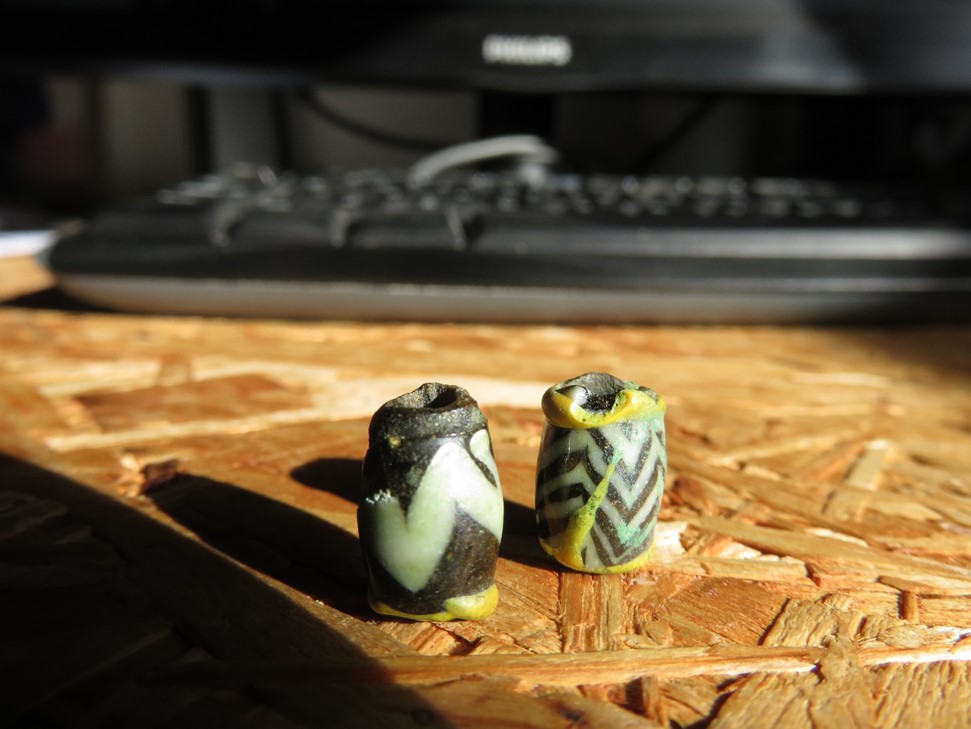
The below pictured, highly decorated, beads were found in Latvia and may be of Byzantine origin. They are 12/13 mm in length. The left one weighs 1.55 grams, the right one 1.82 grams.
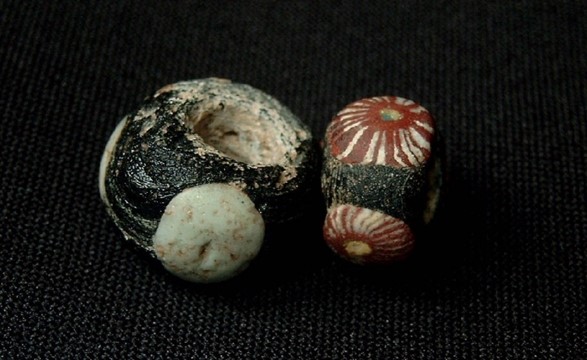
The beads pictured below were found at Lake Ladoga in northwestern Russia. The bead on the left measures 18 mm in diameter and weighs 4.27 grams. The bead on the right measures 14 mm in diameter and weighs 2 grams.
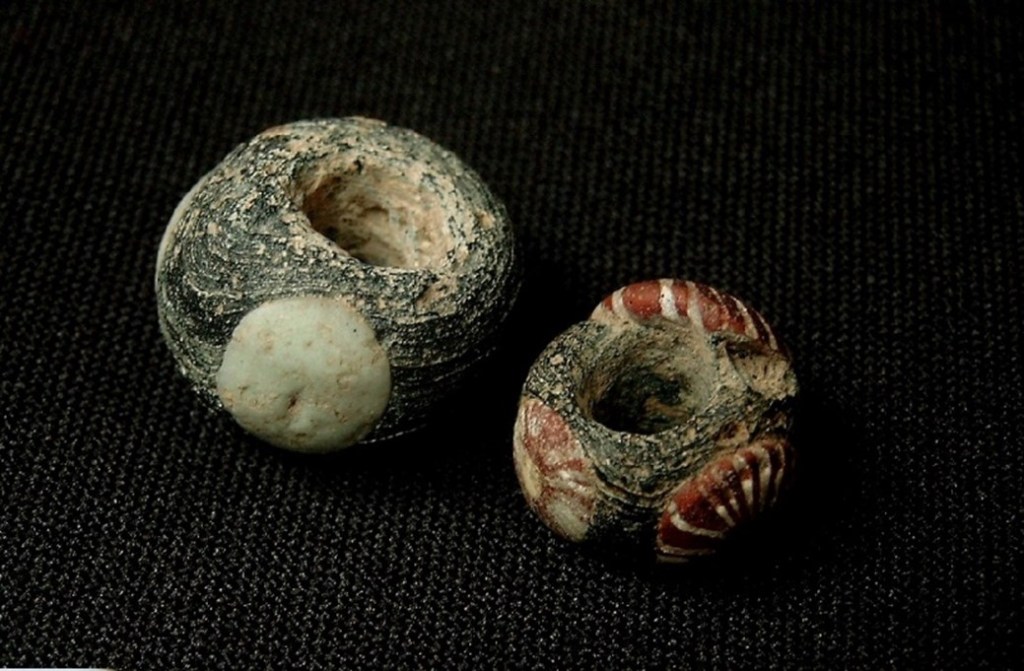
The two amber beads come from the same area. The left one measures 21.5 mm in diameter and weighs 3.71 grams. The right one measures 18.5/19 mm in diameter and weighs 1.57 grams.

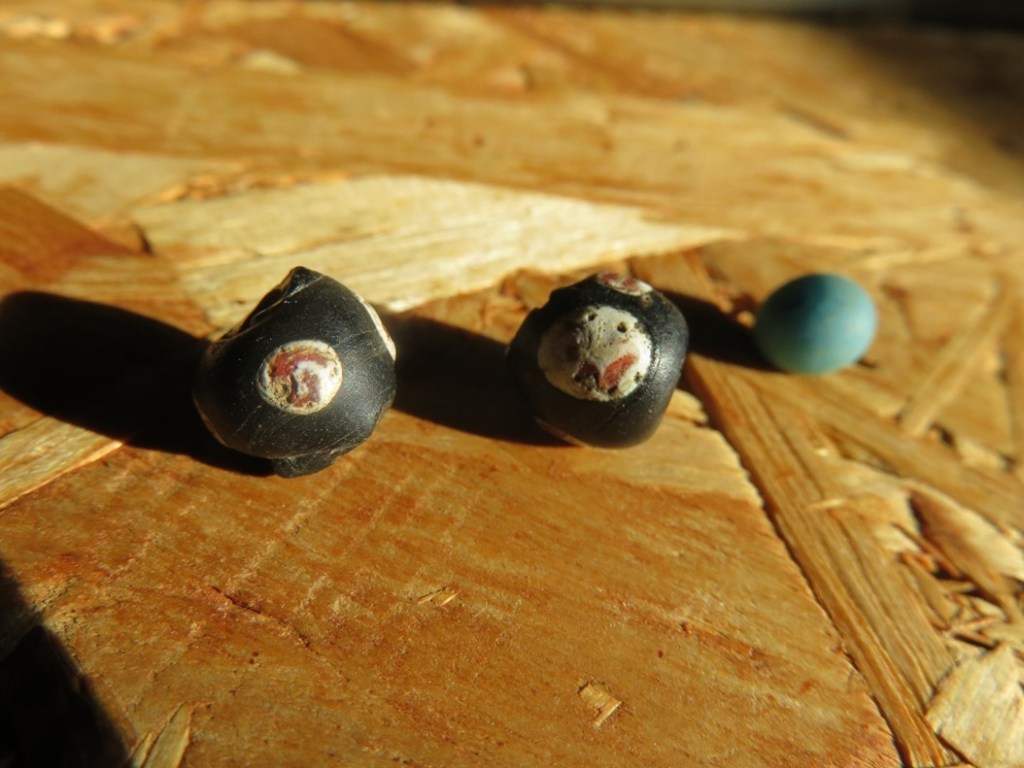
Finally, the beads below also come from the area around Lake Ladoga in Russia. The two beads on the left are 10 mm in diameter and weigh 1.08 and 0.92 grams respectively. The blue bead measures 9 mm in diameter and weighs 0.45 grams.
See also:
Link to more info about viking beads
Link to an investigation on segmented, metal-foiled glass beads and blown,
 www.vikingartefacts.com