contact: vikingsandartefacts@yahoo.com

Artefacts from the Viking Age and Norman period

See for my blog here and the artefacts under the image.

‘…hold the roots…’


‘It is people like you who hold the roots and give back to many who thought they were lost.’ Rhiannon Scharfetter – Vienna, Austria https://myskaldkonur.com

I have been suggested to contact you, a Viking specialist, for your competence and sensibility to the problems of those interested in ancient objects.’ Antonio Barsotti – Pisa, Italy. 

Book Vikings and the artefacts from the Viking Age (published October 2025) image on front: Luit van der Tuuk. (Wessel Spoelder on Facebook group Medieval Finds: “Sometimes you come across a book that manages to present a well-worn subject with such clarity and freshness that it immediately captures your attention. That is exactly what happens when you open Vikings and Artefacts from the Viking Age.
Unlike many other books on this period, this work does not get bogged down in dry dates. It succeeds in a unique way in explaining who the Vikings really were and where they came from. The text is accessible and enlightening, bringing history to life before your eyes.
What makes this book a real ‘breath of fresh air’, however, is its focus on the metal artefacts. The beautiful, detailed photographs of the objects – from fibulae to weaponry – draw you into the story. You can see the craftsmanship and the spirit of the makers reflected in every item discussed. It is not just a book to read, but also a visual tribute to Viking culture.
For anyone who is even slightly curious about this fascinating period: look no further. This book is an absolute must-read and a gem for your bookshelf!”

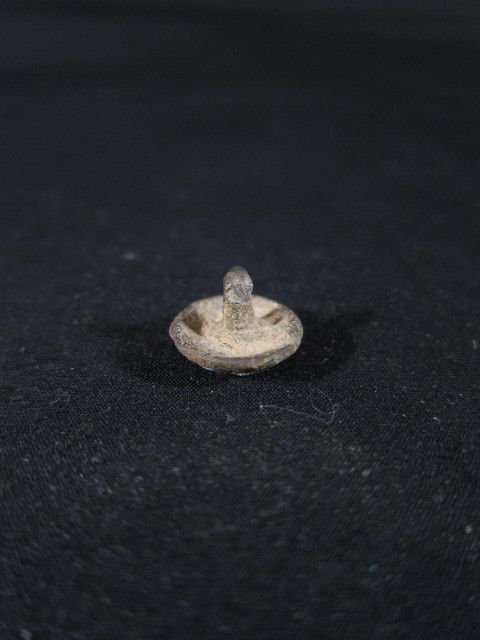
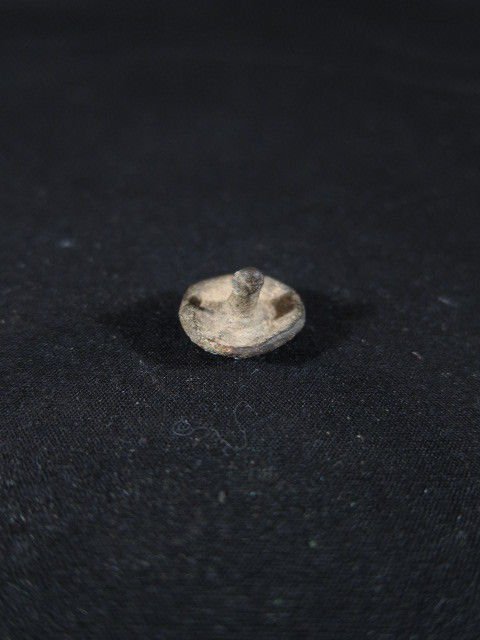
Rus viking enamelled stud

This is an enamelled bronze stud, disc shaped with light blue enamel dots circling a dished centre. Found on a 10th century viking archaeological dig site near Novgorod, Russia, early 1960’s, it was awarded to the previous owner for his efforts on the dig. It is dating to ca. 10th century A.D. It measures 1.4cm diameter. The stud could have been part from a belt, but very well possible also from the gear of a horse, if this is the harness or the saddle. Compare also the drawings made on reconstructions on 10th-11th century Magyar headgear studs, found in Austria on the right top of the drawing beneath. Though here two bronze pins accompany the stud for adding it to the headgear / harness of the horse.

In cross section it measures 14 mm and weighs 3,25 grams.