contact: vikingsandartefacts@yahoo.com

Artefacts from the Viking Age and Norman period

See for my blog here and the artefacts under the image.

‘…hold the roots…’


‘It is people like you who hold the roots and give back to many who thought they were lost.’ Rhiannon Scharfetter – Vienna, Austria https://myskaldkonur.com

I have been suggested to contact you, a Viking specialist, for your competence and sensibility to the problems of those interested in ancient objects.’ Antonio Barsotti – Pisa, Italy. 

Book Vikings and the artefacts from the Viking Age (published October 2025) image on front: Luit van der Tuuk. (Wessel Spoelder on Facebook group Medieval Finds: “Sometimes you come across a book that manages to present a well-worn subject with such clarity and freshness that it immediately captures your attention. That is exactly what happens when you open Vikings and Artefacts from the Viking Age.
Unlike many other books on this period, this work does not get bogged down in dry dates. It succeeds in a unique way in explaining who the Vikings really were and where they came from. The text is accessible and enlightening, bringing history to life before your eyes.
What makes this book a real ‘breath of fresh air’, however, is its focus on the metal artefacts. The beautiful, detailed photographs of the objects – from fibulae to weaponry – draw you into the story. You can see the craftsmanship and the spirit of the makers reflected in every item discussed. It is not just a book to read, but also a visual tribute to Viking culture.
For anyone who is even slightly curious about this fascinating period: look no further. This book is an absolute must-read and a gem for your bookshelf!”

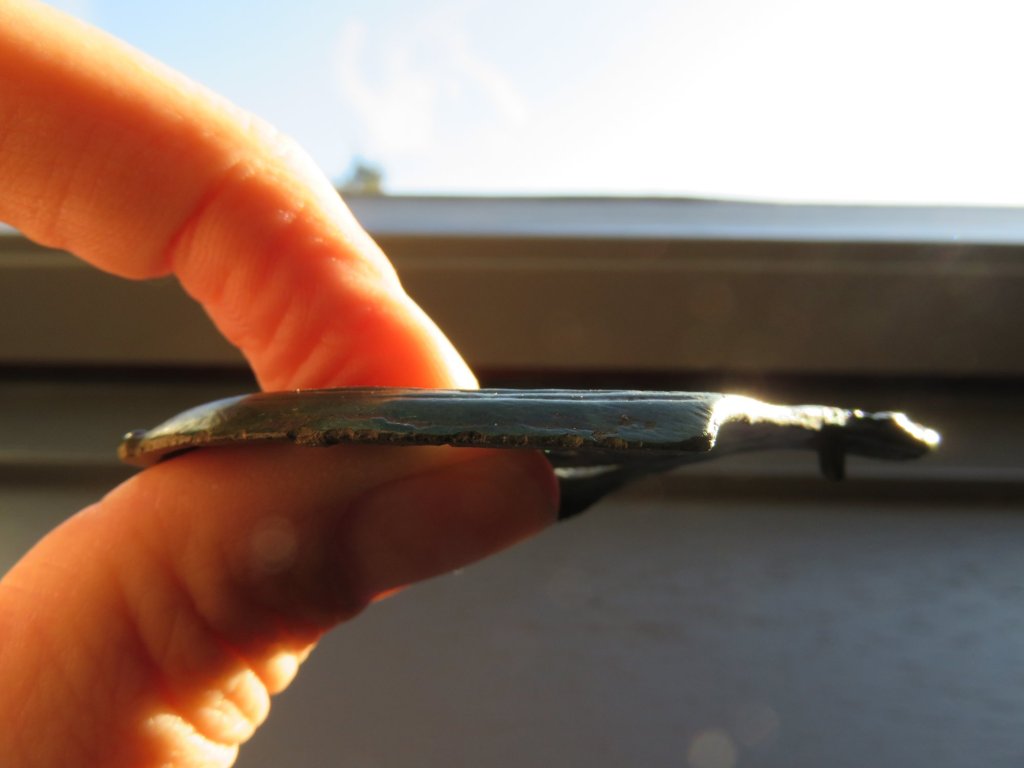
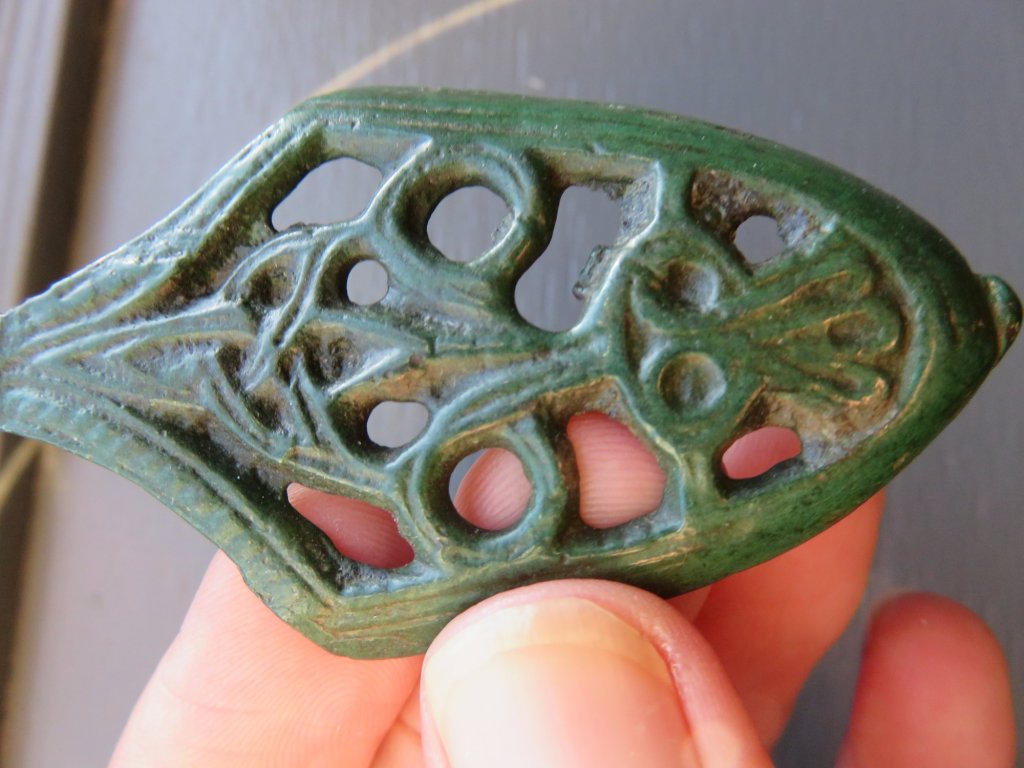
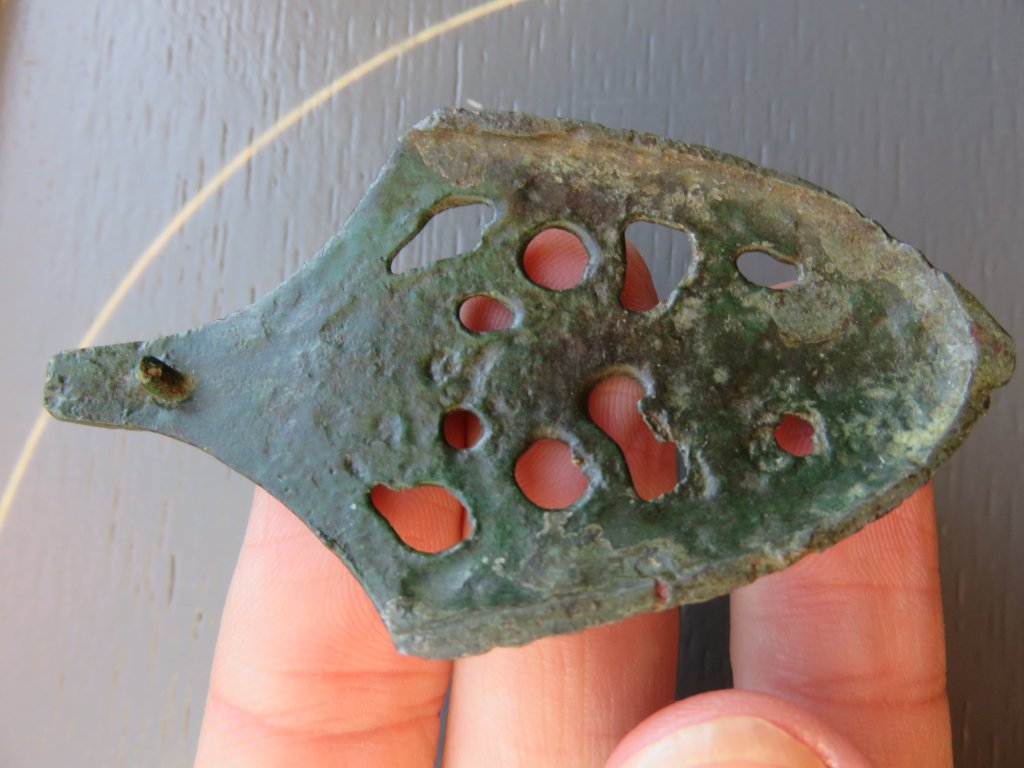
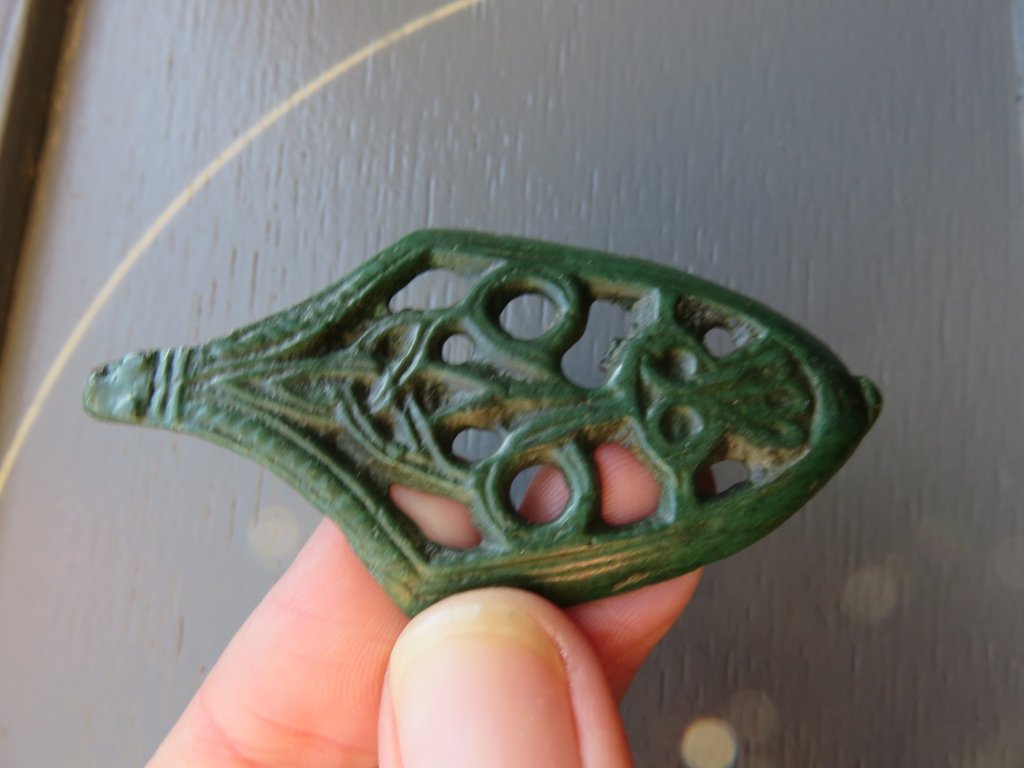
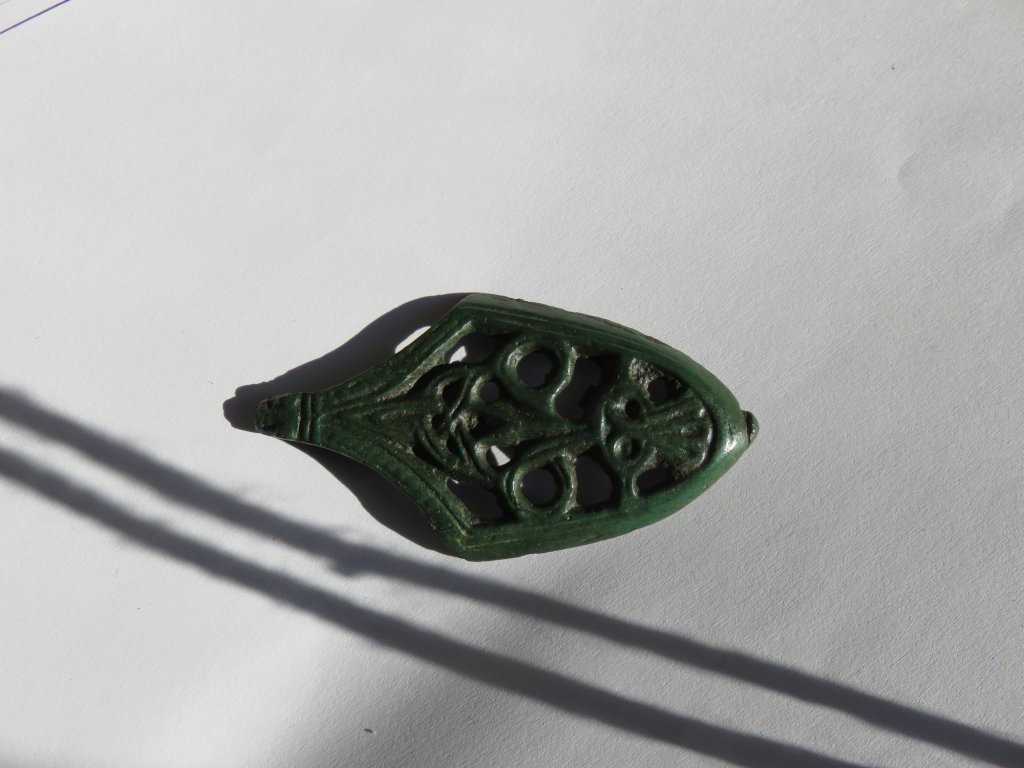
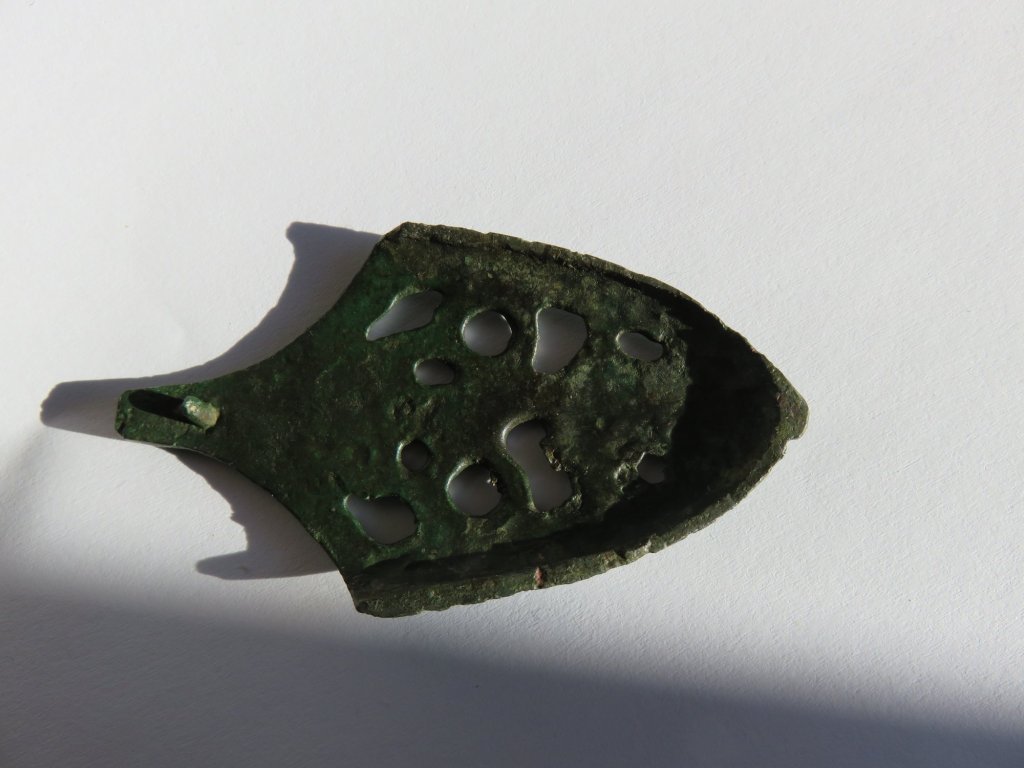
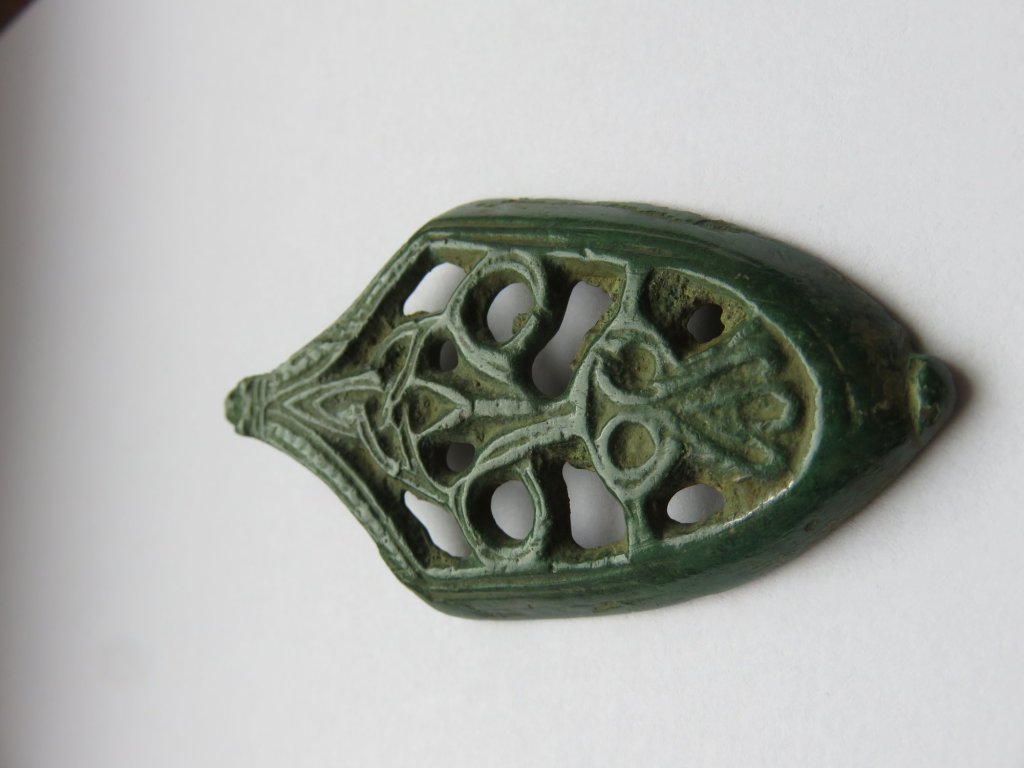
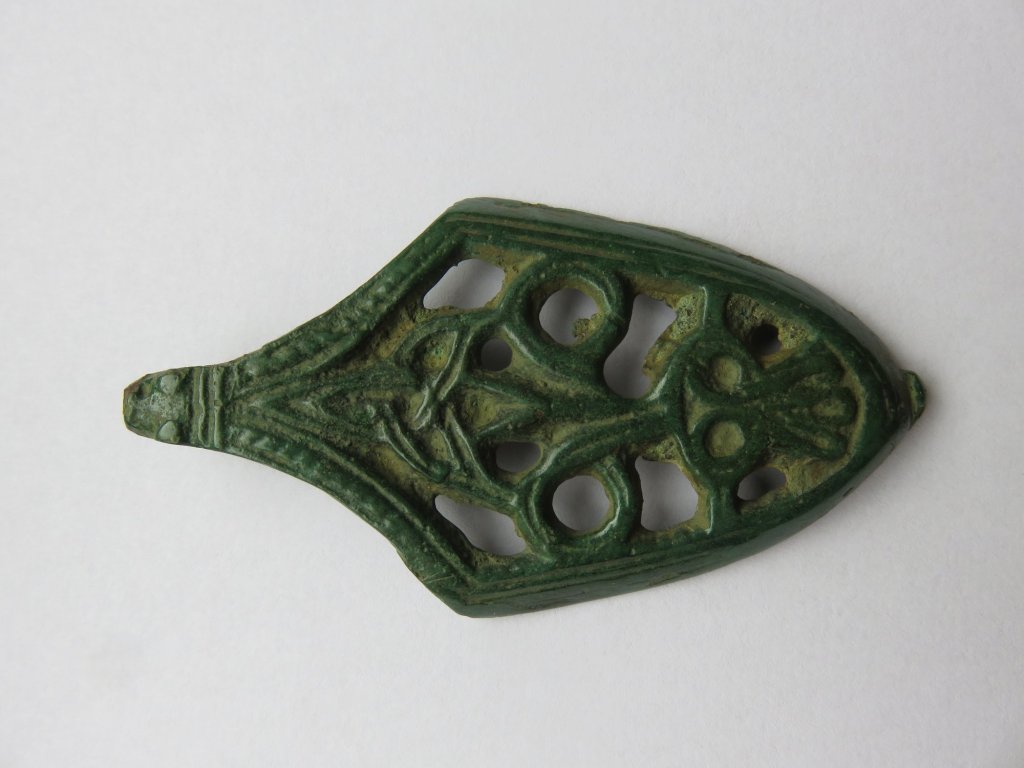
Eastern type viking sword chape bird and trequeta type

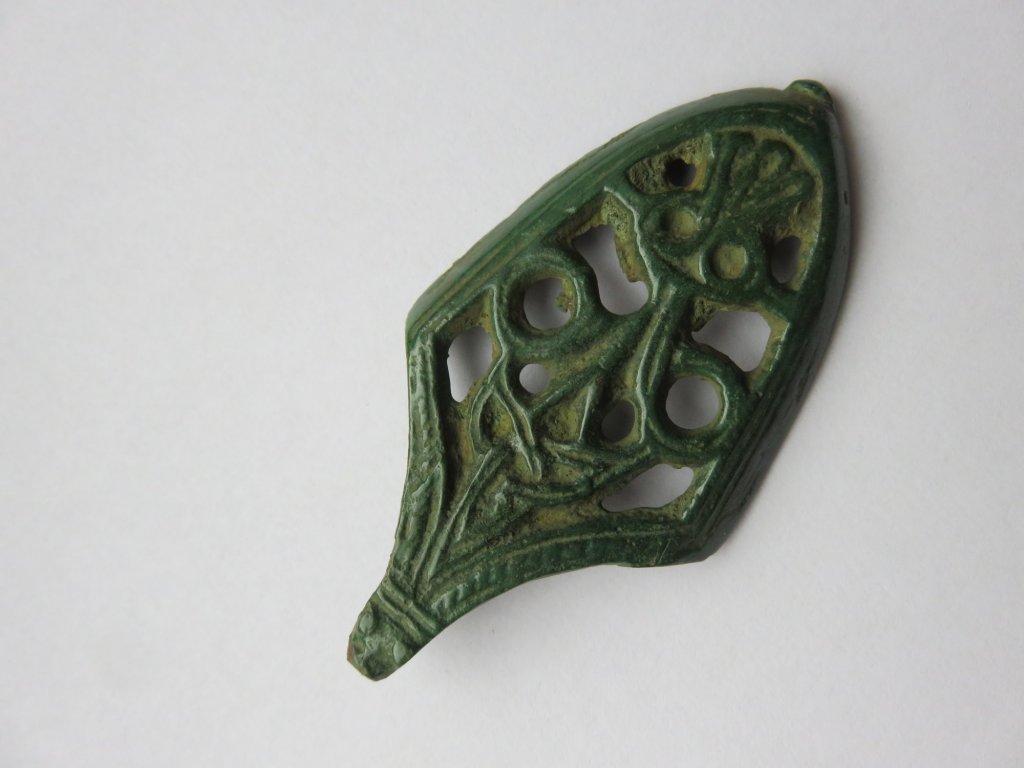
This sword chape – found in western Latvia – is also of a very rare type. It is one half of a chape. Two halves were casted and attached together with lead. Due to soil conditions, the lead could have been corroded or dissapeared, leaving the chape seperated in one half. Peter Paulsen has catagorized this kind of sword chape among the bird type sword chapes of the Viking Age, Örtbander mit germanischer Vögelmotiv.  With a bit of phantasy a bird like form can be seen, with the head of the bird formed by a trequeta form motif. The trequeta is a very old  Indo-European religious sign. Many religions consider the number 3 as a holy number. The trequeta sign had been found as interlacing circles on 5000 year old Indian religious statues. In Europe the trequeta symbol was found much later, from the 8th century A.D. The motif is being found – for example – on the coin die of the Viking kingdom of York on the so called ‘trequeta pennies’
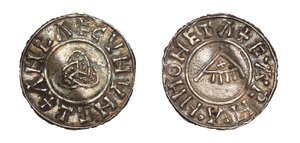
Viking kingdom of York trequeta type penny.

Similar examples had been found in Oxhöft and Löbertshoff in Poland. Andrzej Janowski of the Polish Academy of Sciences, Institute of Archeaology and Ethnology, mentioned a found of this type from Podzamce near Kwidzyn. From recent date two finds are known from Netno and Tur (also Poland), excavated in 2010 and 2015. Another example is known to me in the collection of Ru Smith (link attached in the references).

One can say that only app. 10 examples known, this is a rare kind of Viking Age sword chape type!

References:

Janowski, A., Gotland chape with the Tree of Life image from Szczecin’s Podzamcze (Suburbium)

https://www.academia.edu/433562/Gotlandzki_trzewik_pochwy_miecza_z_przedstawieniem_drzewa_%C5%BCycia_ze_szczeci%C5%84skiego_Podzamcza_text_in_Polish_with_summary_in_English_Gotland_chape_with_the_Tree_of_Life_image_from_Szczecins_Podzamcze_Suburbium_

Janowski, A., Bronze and silver chapes from the 10th – 13th century swords from the territory of Poland, p. 29

Paulsen, P., Schwertortbänder der Wikingerzeit, 1953

p.17 1. Ortbänder mit germanischen Vogelmotiv and further: p. 22 – 29 Untergruppe b.

p. 21 image 8 and 9.

http://www.pbase.com/hajar/image/141271587