contact: vikingsandartefacts@yahoo.com

Artefacts from the Viking Age and Norman period

See for my blog here and the artefacts under the image.

‘…hold the roots…’


‘It is people like you who hold the roots and give back to many who thought they were lost.’ Rhiannon Scharfetter – Vienna, Austria https://myskaldkonur.com

I have been suggested to contact you, a Viking specialist, for your competence and sensibility to the problems of those interested in ancient objects.’ Antonio Barsotti – Pisa, Italy. 

Book Vikings and the artefacts from the Viking Age (published October 2025) image on front: Luit van der Tuuk. (Wessel Spoelder on Facebook group Medieval Finds: “Sometimes you come across a book that manages to present a well-worn subject with such clarity and freshness that it immediately captures your attention. That is exactly what happens when you open Vikings and Artefacts from the Viking Age.
Unlike many other books on this period, this work does not get bogged down in dry dates. It succeeds in a unique way in explaining who the Vikings really were and where they came from. The text is accessible and enlightening, bringing history to life before your eyes.
What makes this book a real ‘breath of fresh air’, however, is its focus on the metal artefacts. The beautiful, detailed photographs of the objects – from fibulae to weaponry – draw you into the story. You can see the craftsmanship and the spirit of the makers reflected in every item discussed. It is not just a book to read, but also a visual tribute to Viking culture.
For anyone who is even slightly curious about this fascinating period: look no further. This book is an absolute must-read and a gem for your bookshelf!”

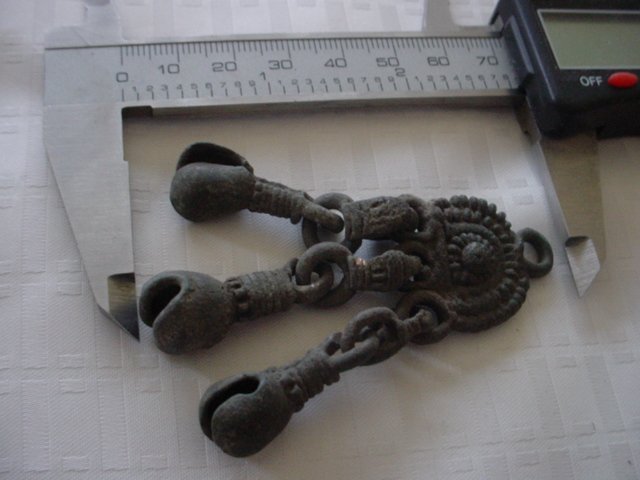
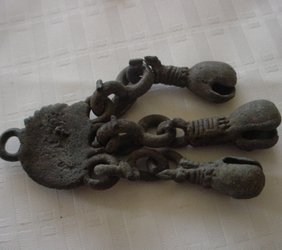
Rus or Baltic viking pendant or amulet

This is one of the very first items I studied. I saw it on Ebay, somewhere in 2008 when 9 out of 10 objects were genuine (nowadays it is the other way around). Viktor Bunkowski told me – as the exact findspot of this pendant isn’t known that this type of pendants were found in the Ladoga Sea area (Baltic part of Russia). Of course, ‘Baltic’ and ‘Russia’ are modern age denotations.

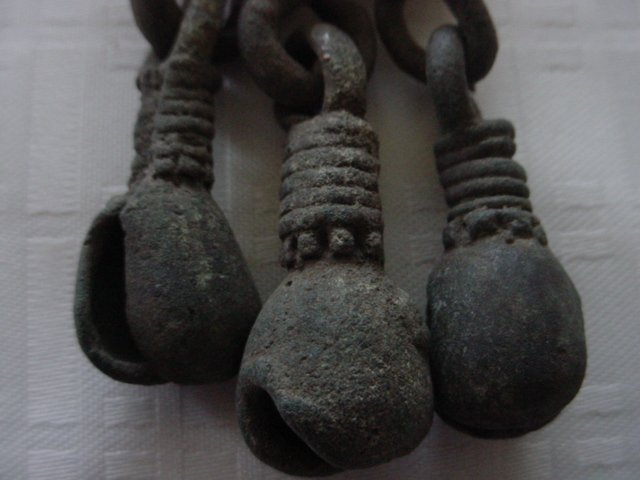
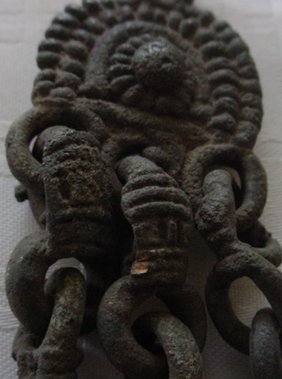
The artefact itself. What was it? A pendant, for sure.. but just a pendant? I think it was a charm/amulet to keep the evil spirits away when the woman was walking outside (or at home).

The dangling bells (sometimes duckfeet on similar objects) had the function to chase away evil spirits.

Duckfeet shaped (on) pendants had also been linked to sorcery and a seerres in Fyrkat, see: https://en.natmus.dk/historical-knowledge/denmark/prehistoric-period-until-1050-ad/the-viking-age/religion-magic-death-and-rituals/a-seeress-from-fyrkat

An exact parallel I have found in a drawing in the book:

Sedov,B.B. Finno-Ugri i Balti v Epokhi Srednevekovija, Moscow, 1987 (p. 305).