contact: vikingsandartefacts@yahoo.com

Artefacts from the Viking Age and Norman period

See for my blog here and the artefacts under the image.

‘…hold the roots…’


‘It is people like you who hold the roots and give back to many who thought they were lost.’ Rhiannon Scharfetter – Vienna, Austria https://myskaldkonur.com

I have been suggested to contact you, a Viking specialist, for your competence and sensibility to the problems of those interested in ancient objects.’ Antonio Barsotti – Pisa, Italy. 

Book Vikings and the artefacts from the Viking Age (published October 2025) image on front: Luit van der Tuuk. (Wessel Spoelder on Facebook group Medieval Finds: “Sometimes you come across a book that manages to present a well-worn subject with such clarity and freshness that it immediately captures your attention. That is exactly what happens when you open Vikings and Artefacts from the Viking Age.
Unlike many other books on this period, this work does not get bogged down in dry dates. It succeeds in a unique way in explaining who the Vikings really were and where they came from. The text is accessible and enlightening, bringing history to life before your eyes.
What makes this book a real ‘breath of fresh air’, however, is its focus on the metal artefacts. The beautiful, detailed photographs of the objects – from fibulae to weaponry – draw you into the story. You can see the craftsmanship and the spirit of the makers reflected in every item discussed. It is not just a book to read, but also a visual tribute to Viking culture.
For anyone who is even slightly curious about this fascinating period: look no further. This book is an absolute must-read and a gem for your bookshelf!”

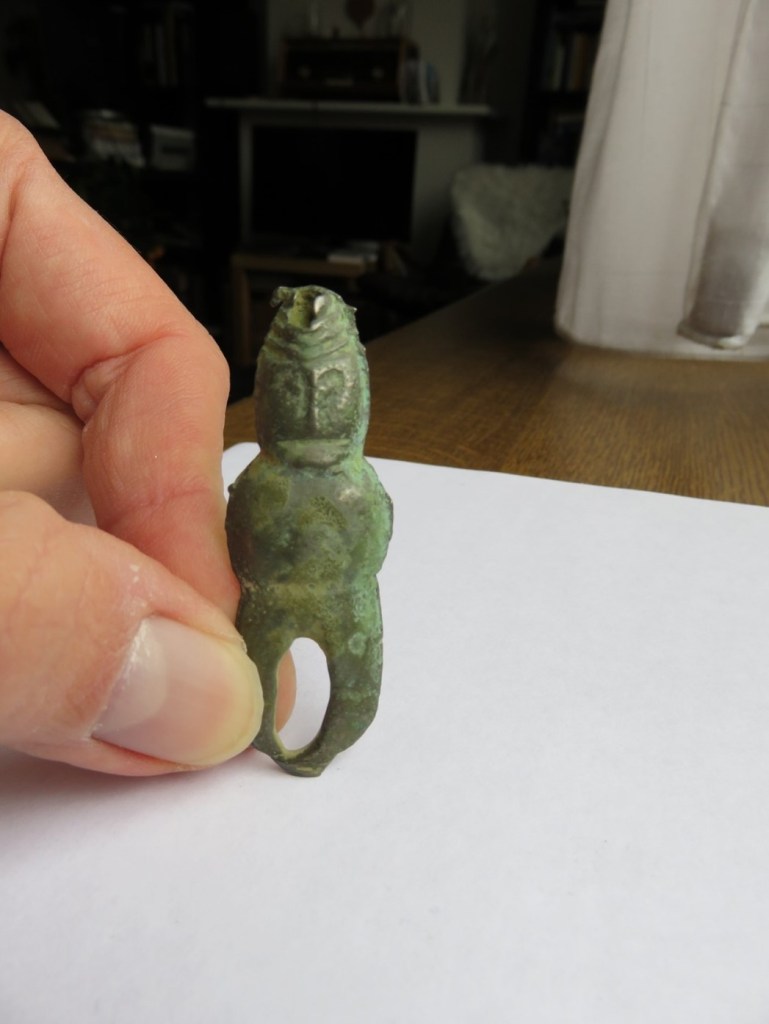
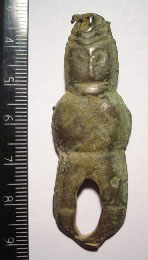
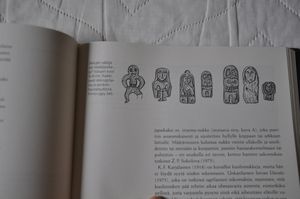
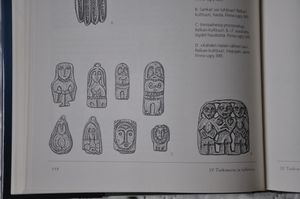
Finnic idol from the Viking Age

A truly wonderful object – exact location unknown – is this so-called idol. This kind of idols has been found in the Finnish area.


640 / 5.000

Images of people on objects are extremely rare in Finnish culture (at the time of the Vikings). Usually only animals, such as birds, bears, wolves and horses are depicted. They are only found among the Finnish (Finno-Ugric) tribes that lived far away in the east of modern-day Europe, sporadically in the – present – ​​Baltic area. The depicted human-like figures are probably amulets or images of shamans. So, either these kinds of objects were used daily, or only during special occasions such as rituals, whether or not performed by a shaman within the tribe.

The object measures just over 58mm in length and 20mm in width and weighs 15.03 grams.

References

Kotkat, Hirvet, Karhut – Permiläistä pronssitaidetta (2000).

Author: Autio Eero

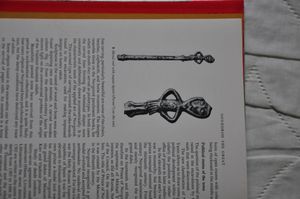
Novgorod the Great, Excavations at the Mediëval City, 1951 – 1962, directed by A.V. Artsikhovsky & B.A. Kulchin by M.W. Thompson

Reacties

Plaats een reactie